70% of carts are still abandoned in 2026. See the latest retail AI stats, why AI agents are fixing ecommerce conversion, and where D2C brands go next.

Walk into any retail conversation in 2026 and you’ll hear the same sentence in five different ways: “AI is changing how people shop.” It’s a bit of a cliché by now. But behind the buzzword, the numbers tell a much sharper story – one that every retail and D2C brand owner needs to actually sit with, not just skim past.
Here’s the uncomfortable part first: online stores are still losing the vast majority of their visitors before checkout. According to Baymard Institute’s analysis of 50 separate studies, the average cart abandonment rate in 2026 sits at roughly 70%, which works out to about $260 billion in recoverable revenue across the US and EU alone. That number has barely moved in ten years, even after brands poured billions into checkout redesigns, retargeting ads, and abandoned-cart emails.
At the same time, something genuinely new is happening. Shoppers who get help from an AI agent while browsing are converting at rates that would have sounded made up two years ago. This blog breaks down what’s actually changing in retail right now, backed by 2026 data, and why “AI agent” has quietly become one of the most important lines on a retailer’s tech stack – not just a nice-to-have chatbot.
Summary
- Average ecommerce conversion in 2026 is still stuck between 2.5% and 3.3%, and mobile trails even lower.
- Shoppers who interact with an AI shopping agent convert at roughly 4x the rate of unassisted browsers – 12.3% vs 3.1% in one large multi-brand dataset.
- Cart abandonment remains at ~70%, representing hundreds of billions in lost revenue every year.
- 89% of retailers have adopted some form of AI, but only about 7% have scaled it fully – most are still stuck at the pilot stage.
- India’s D2C market is projected to hit roughly $108.76 billion in 2026, growing at over 24% a year, with quick commerce as the fastest-moving channel.
- Purpose-built AI agents – for sales, shopping guidance, and post-purchase support – are becoming the practical way brands close this gap.
Why 2026 Is a Turning Point for Retail
Retail has gone through a few real inflection points: the shift from stores to websites, then to mobile, then to social commerce. What’s happening now is different in one important way – for the first time, the “salesperson” on a website isn’t a static page or a scripted chatbot. It’s a system that can actually understand what a shopper is trying to do and respond to it in real time.
A few data points explain why this shift is happening so fast:
AI-referred traffic is exploding. Adobe data shows AI-referred traffic to US retail sites jumped nearly 805% year-over-year on Black Friday 2025, and some industry trackers put generative-AI referral growth even higher across the 2025 holiday season. Shoppers are increasingly starting their research on AI tools before they ever land on a brand’s website.
Shoppers who arrive via AI convert better, not worse. Multiple 2026 datasets point the same direction – visitors referred by AI assistants like ChatGPT are converting noticeably higher than average site traffic, and in some reports, higher than paid search. These aren’t casual browsers; the AI has already done the matching work before the shopper clicks through.
Budgets are following the behaviour. PwC’s AI Agent Survey found 88% of executives plan to raise AI-related budgets specifically because of agentic AI, and Salesforce’s Connected Shoppers Report (based on data from 1,700 retail decision-makers across 21 countries) found 75% of retailers now believe AI agents will be essential just to stay competitive within the next year.
But adoption is uneven. Here’s the catch – while 89% of retailers say they’ve adopted AI in some form, only around 7% have actually scaled it into full production use, according to McKinsey and Stord’s 2026 research. Most brands are still running pilots or partial rollouts. Capgemini’s Rise of Agentic AI report puts it plainly: only 2% of organisations have deployed AI agents for ecommerce at full scale.
That gap between “talking about AI” and “actually running it at scale” is exactly where the opportunity sits for brands willing to move first.
The Real Cost of Doing Nothing
It’s worth putting a number on what a “wait and see” approach actually costs a retail business.
The global average ecommerce conversion rate is still stuck between 2.5% and 3.3%, meaning well over 96% of visitors leave without buying. Mobile conversion is even weaker, landing between 1.8% and 2.8%, despite mobile traffic making up over 70% of all ecommerce visits today.
Why does this happen? Online shopping was built as a self-service experience. A shopper browses alone, and the moment they hit a question a product page can’t answer – sizing, delivery timelines, compatibility, return policy – a large share of them simply leave. They aren’t rejecting the product. They’re rejecting the lack of help at the exact moment they needed it.
The same pattern shows up after the sale too. Support tickets pile up around the same repetitive issues – “where is my order,” return requests, billing questions – and every hour a customer waits for a reply is an hour of eroding trust and rising support cost.
How AI Agents Are Closing the Gap
This is where the retail industry has landed on a fairly consistent answer in 2026: purpose-built AI agents, not generic chatbots, mapped to specific moments in the shopper journey – from the first DM to the last support ticket.
Four agent types are showing up again and again across the data and across live deployments:
- Sales AI Agent – turns browsing intent into action. It recommends relevant products, suggests upgrades or bundles at the right moment, and helps shoppers compare options without feeling pushed. This is the layer directly responsible for lifting average order value and conversion rate, guiding product discovery in real time based on what a shopper is actually looking for.
- Social AI Agent – meets shoppers where the conversation already starts: Instagram DMs, WhatsApp, and other social channels. In India especially, a huge share of D2C discovery and buying intent now begins in a chat thread, not a website search bar. A social AI agent replies instantly, answers product questions, shares catalogue links, and nudges an interested follower toward checkout – instead of leaving them waiting hours for a manual reply and losing the moment of intent.
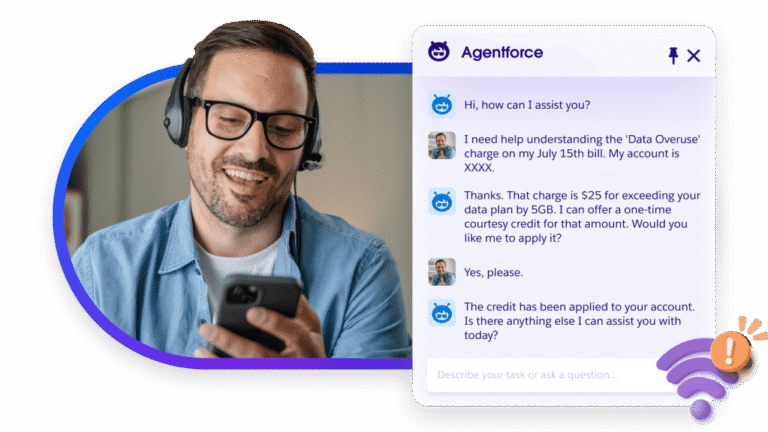
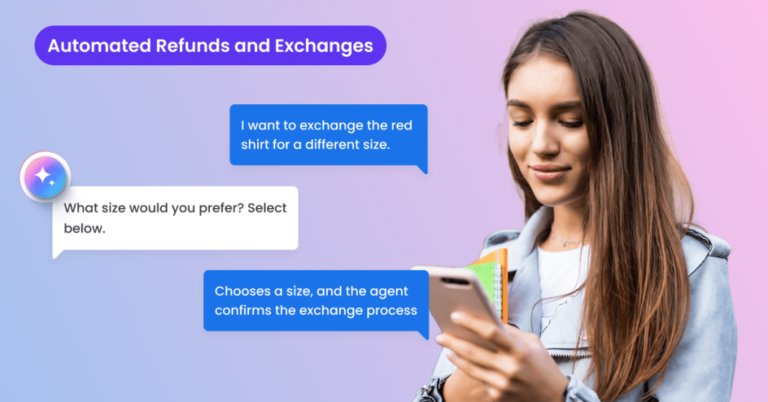
- Support AI Agent – resolves post-purchase issues automatically: order status, returns, exchanges, billing problems – without a customer sitting in a queue. Deflecting even a large share of routine tickets frees human support teams to focus on the complex, high-value conversations that actually need a person.
- AI-native Helpdesk – the layer that ties it all together. Instead of a legacy ticketing system where a human has to triage every query first, an AI-native helpdesk understands, categorises, and resolves conversations across every channel – chat, email, social, WhatsApp – from a single system built around AI-first workflows rather than manual queues. It’s the difference between “AI bolted onto a helpdesk” and a helpdesk designed around AI from day one.
This is precisely the model built by Storesignal, an AI agent platform purpose-built for ecommerce growth and support automation. Storesignal’s Sales, Shopping, and Support agents work together across a store’s existing tech stack – no rebuild required – to increase conversion, recover abandoned carts, and cut support ticket volume, in some cases deflecting over 45% of tickets automatically. For D2C and retail teams trying to close the gap between “we adopted AI” and “AI is actually driving revenue,” this kind of purpose-built, AI-native agent stack is exactly the direction the data points to.
India’s Retail Moment: Quick Commerce, D2C, and AI Converging
If you’re building or scaling a retail brand in India right now, the timing matters even more. India’s D2C ecommerce market is estimated at roughly $108.76 billion in 2026, on track to reach over $322 billion by 2031, growing at more than 24% a year – one of the fastest D2C growth rates anywhere in the world.
Quick commerce has become the new front door for Indian retail. Blinkit, Swiggy Instamart, and Zepto together dominate a market that’s scaling past $11–12 billion, with India recording the fastest quick-commerce growth rate globally at around 17% year-on-year. Same-day and 10-minute delivery are no longer a novelty – they’re baseline consumer expectation.
But scale brings a new problem: more channels, more order volume, more support tickets, and thinner margins if every issue needs a human to resolve it. This is exactly why AI agents for sales, shopping guidance, and support have moved from “future trend” to “current necessity” for Indian D2C and retail brands trying to grow without proportionally scaling their support headcount.
Where This Conversation Continues: The D2C & Retail Summit 2026
If this shift – AI, quick commerce, and the new economics of Indian retail – is something you want to dig into with the people actually building it, The D2C & Retail Summit 2026 is worth your calendar. Hosted by Inc42 on 19th August 2026 at The Leela Ambience, Gurugram, it brings together 600+ invite-only D2C founders, retail CXOs, and investors for sessions on AI-led execution, quick commerce economics, omnichannel infrastructure, and profitable growth.
Storesignal is proud to be an Associate Partner of The D2C & Retail Summit 2026, and we’ll be there to talk through how AI agents are helping ecommerce and D2C teams cut support costs and lift conversion in real deployments. If you’re a founder, CXO, or operator navigating this shift, it’s a good place to compare notes.
conclusion
Retail in 2026 isn’t short on traffic or demand – it’s short on the ability to convert attention into revenue and post-purchase questions into resolved, happy customers. The brands pulling ahead this year aren’t the ones simply “experimenting with AI.” They’re the ones putting purpose-built AI agents to work across sales, shopping assistance, and support – and measuring the lift in real numbers.
If you want to see what that looks like for your own store, explore Storesignal’s AI agents for ecommerce, and if you’re building or scaling a D2C or retail brand in India, we’ll see you at The D2C & Retail Summit 2026 on 19th August in Gurugram.
FAQ
What is an AI agent in retail?
An AI agent in retail is software that can understand shopper intent and take real action – recommending products, answering questions, guiding checkout, or resolving a support ticket – without following a fixed decision tree like a traditional chatbot.
How much can AI agents reduce ecommerce support tickets?
Deployments in 2026 show AI support agents deflecting anywhere from 30% to 45%+ of routine tickets such as order status, returns, and billing questions, freeing human agents for complex cases.
Why is cart abandonment still so high in 2026 despite all the AI investment?
Most retailers have adopted AI tools in some form, but fewer than 10% have scaled them into full production, according to 2026 industry research. The tools exist; execution at scale is still catching up.
Is AI in retail only relevant for large enterprise brands?
No. Mid-market and growing D2C brands are seeing some of the strongest gains, since they can deploy purpose-built agents quickly without the legacy systems that slow down enterprise rollouts.
What’s driving India’s quick commerce and D2C growth in 2026?
Rising smartphone penetration in tier-2 and tier-3 cities, UPI-driven digital payments, ONDC’s low-commission network, and consumer demand for instant delivery are the key growth drivers.
Tags:AI in Retail 2026