Store Signal’s Support AI Agent answers these questions instantly. It connects with your order system and checks the latest order details.

Exchanges are a normal part of e-commerce. A customer orders the wrong size. A color looks slightly different from what was expected. Sometimes they simply prefer another option after seeing the product in person. None of this means something went wrong. It is part of online shopping.
The real problem is not the exchange itself. It is how long and complicated the exchange process feels for the customer and the support team.
Why Product Exchanges Become A Hidden Operational Burden
At first, an exchange sounds simple. A customer just wants a different size or another item. But in reality, it is not that quick to handle.
The support team has to check when the order was placed, see if it still falls under the exchange policy, confirm the return period, check if the new item is in stock, and then explain the next steps to the customer. This usually turns into a few messages going back and forth before anything actually moves forward.
Over time, this creates pressure in three areas:
- Multiple touchpoints per request: One exchange often generates three to five messages. This increases ticket volume without increasing order count.
- Longer resolution cycles: Customers wait for confirmation before shipping the original product back. This delay stretches the exchange timeline.
- Customer uncertainty: If instructions are unclear or slow, customers feel unsure about what will happen next.
As order volume grows, exchange requests grow with it. What once felt manageable becomes a steady stream of repetitive operational work.
What Customers Actually Expect During An Exchange
When customers request an exchange, they are not looking for a complex process. They want clarity and speed.
They want to know:
- Am I eligible for an exchange?
- Is the new size or variant available?
- What do I need to do next?
- When will I receive the replacement?
If they receive clear answers quickly, the experience feels smooth. If they wait for manual confirmation, frustration begins to build.
In e-commerce, post-purchase experience directly affects repeat buying behavior. A difficult exchange can quietly reduce future sales. A smooth exchange can strengthen loyalty.
What Changes When Exchanges Are Automated
When exchanges run on their own, things just move more quickly. Customers do not have to wait for someone to check their order. The system looks at the details and tells them straight away what is possible and what they need to do next.
You start seeing simple changes:
- People begin the exchange without waiting: They do not have to sit around for a reply just to know if it is allowed.
- There are fewer repeated messages: Most of the answers are given upfront, so the conversation does not drag on.
- Your team is not stuck doing the same checks all day: They can spend time on damaged items or cases that actually need attention.
- Customers worry less about ordering again: When they know exchanges are easy, they feel more comfortable buying from you.
Automation does not remove human control. It removes unnecessary delay.
How StoreSignal Handles Product Exchanges Step-by-Step
StoreSignal handles exchanges in the same way your support team already does, just without someone having to check everything manually for routine cases.
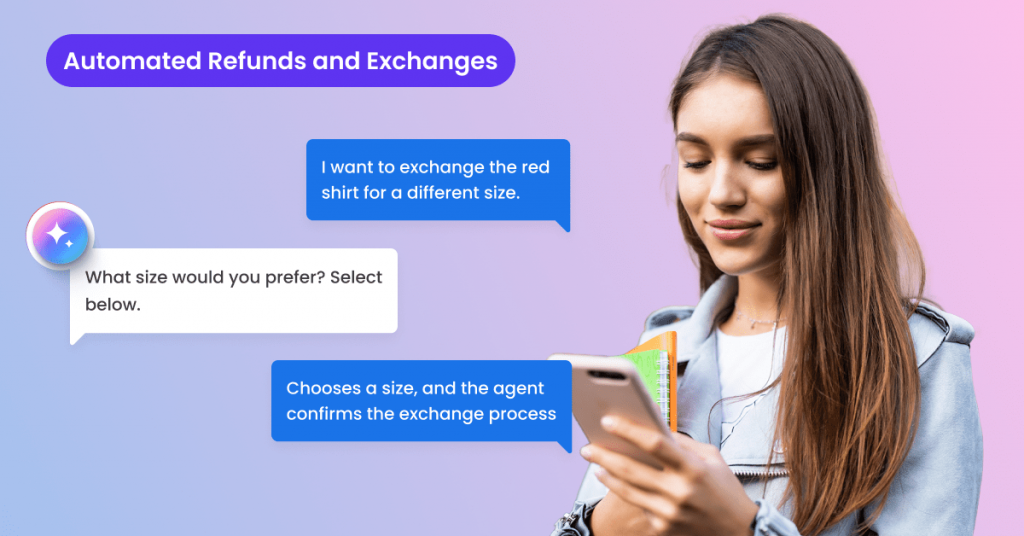
- Customer asks for an exchange: A shopper opens chat and says they need a different size, color, or option. The system understands what they mean, even if the message is casual.
- The order details are checked: It looks at when the order was placed and whether it still falls within your exchange period. If it meets your rules, it moves ahead.
- It checks if the new item is available: Before confirming anything, it makes sure the requested size or variant is actually in stock.
- Clear return instructions are provided instantly: The customer receives step-by-step guidance on how to return the original product. This includes timelines and next steps.
- Replacement workflow begins: If all conditions are satisfied, the exchange process moves forward without manual approval. If something falls outside policy, the conversation can be routed to a human agent.
For most routine exchanges, the entire request is handled within minutes rather than days.
Real Example From A Scaling Apparel Brand
A growing fashion brand experienced a steady increase in size-related exchange requests. During promotional periods, exchange tickets nearly doubled. Each request required manual checks and multiple replies.
Support agents were spending a large portion of their day managing size swaps instead of addressing more complex customer issues.
After implementing StoreSignal, customers began initiating exchanges directly through chat. The system verified eligibility, checked inventory, and provided immediate instructions.
Within the first month:
- Exchange-related ticket volume reduced significantly
- Average exchange resolution time shortened
- Follow-up messages from customers decreased
- Agents shifted focus toward refund disputes and damaged item claims
The brand was able to maintain service quality during high-volume periods without expanding the support team.
How This Affects Growing Online Stores
As your online store starts getting more orders, small tasks begin taking up more time than you expect. That is when having a smoother way of handling things becomes important. Exchanges are predictable and policy-based. That makes them ideal for automation.
When automated properly, exchanges contribute to long-term efficiency in several ways:
- Stable support headcount during growth: You do not need to hire additional agents solely to manage size or variant swaps.
- Improved peak season management: High-traffic periods no longer result in exchange-related backlogs.
- Lower cost per support interaction: Automated resolution reduces manual effort per order.
- Customers are more likely to come back and shop again: When exchanges are simple and not stressful, people feel more comfortable ordering from you in the future.
If the exchange process feels easy, the whole experience after buying feels better too. That directly influences long-term customer value.
Behind The Scenes: Maintaining Accuracy And Control
Exchange automation only works when it follows clear business rules. StoreSignal applies your existing policies when verifying eligibility. It respects exchange windows, product restrictions, and inventory conditions.
If an exchange falls outside standard guidelines, the system does not force automation. Instead, it escalates the case to a human agent for review.
This ensures consistency without losing control. Your policies remain central to the workflow.
Frequently Asked Questions
Can customers still speak to a support agent if needed?
Yes, if a request falls outside your exchange rules or requires special attention, it can be transferred to a human agent.
Does the system follow our specific exchange policy?
Yes, StoreSignal applies your defined return and exchange conditions when verifying requests.
What happens if the replacement item is out of stock?
Before confirming the exchange, the system checks whether the requested item is actually available. If it is not in stock, the customer is informed right away and shown other available options instead.
Will this work during major sale events?
Yes, exchange automation continues even during high traffic periods without increasing manual workload.
How quickly can customers begin the exchange process?
Customers can start immediately through chat without waiting for manual approval.